
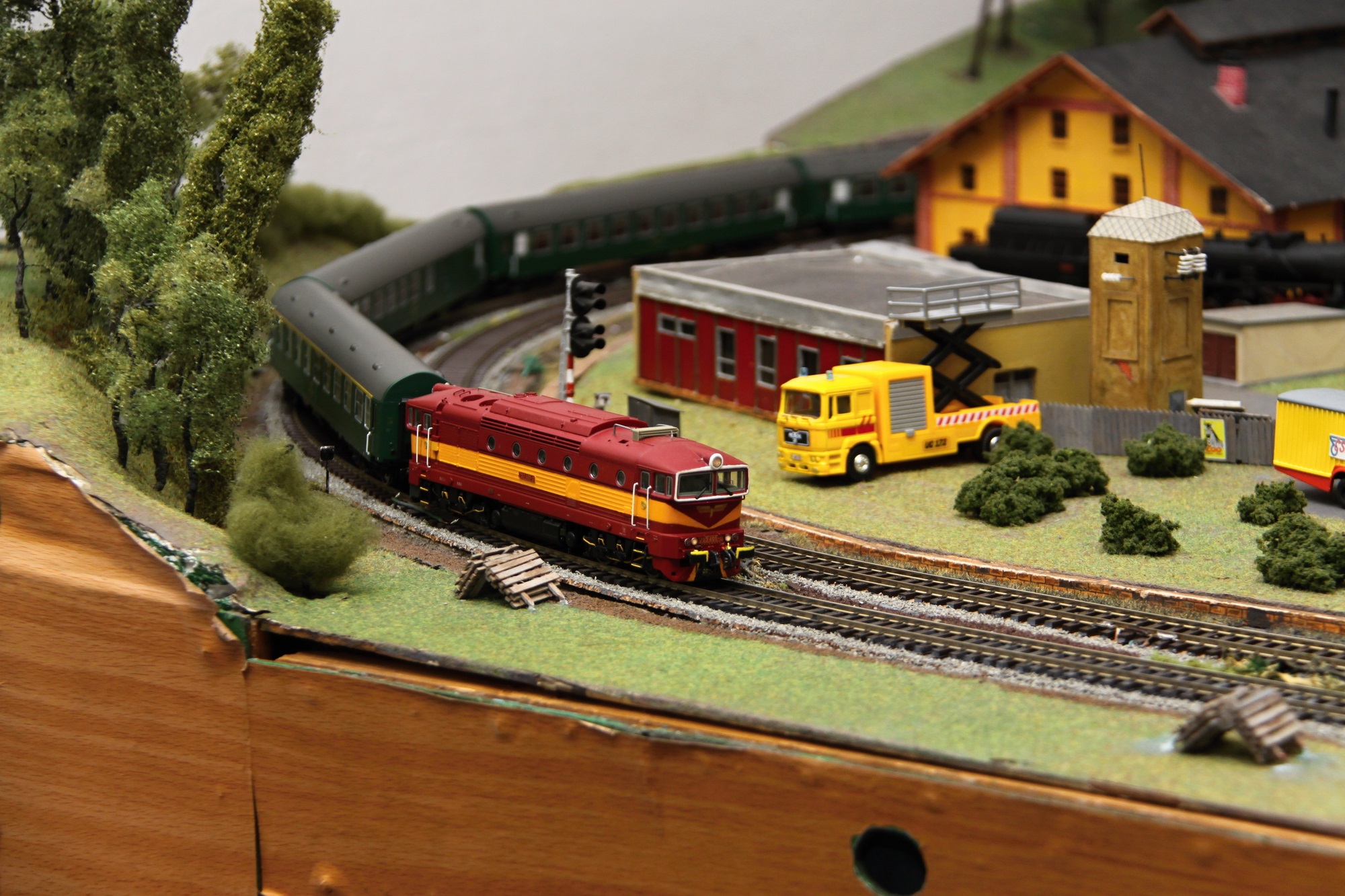
Christmas is just past, which means that many people are setting up new layouts, and even more are pulling old trains out of the closet.
I’ve responded to a bunch of posts on this on Reddit, so much so that I eventually realized that it would probably be better to write a post on the topic.
So, here’s how you can troubleshoot your trains and layout.
The first thing you should know is that model train layouts follow the same basic rule as airplanes: Where a plane is a collection of parts which mostly work well enough to keep the plane in the air, a model train layout is a collection of ports where most of the time everything is working just well enough to keep the trains moving.
Basically, what I am saying is that if your train doesn’t run, the problem might be:
- Mechanical issue in the locomotive,
- Electrical issue in the locomotive,
- A “stiff” or “stuck” motor,
- Dirty track,
- Track wiring,
- Bad connection between the track and the power supply, or
- Defective power supply.
One or more of those might be the issue. (And if the locomotive, track or power supply are older, you might have several problems.)
Let’s start with the locomotive.
Troubleshooting the Locomotive
EDIT: I think I goofed a little with this post. I was trying to explain what to do if nothing on the layout works, and I forgot I could save you time by explaining how to how to diagnose a couple simple problems.
- If the locomotive lights up but doesn’t move, you have an electrical or mechanical issue.
- If the locomotive’s motor hums but it doesn’t move, you have a mechanical issue.
If either of the two above sentences describe your situation then you can skip the rest of this post and take your locomotive in for service.
The rest of this post is intended to help when you don’t know what’s broken.
I like to start with a spare locomotive and a battery to use as a power supply. I keep a Kato engine on hand for this because they run quite nicely on shitty track (the Kato 110 chassis I’ve mentioned elsewhere is perfect for this). I also have a 9v battery to power it.
The first thing I do is remove everything from the track, and add the test locomotive. If that works with your existing power supply, the the problem is one of the cars and engines you removed. Either the locomotive doesn’t work, or something is shorting out the track (cars can short the track, yes).
If the test locomotive doesn’t move, I then disconnect the power supply from the track and remove everything from the track except for the locomotive which wasn’t working before.
If the locomotive which wasn’t working before:
- moves when power is supplied by the 9v then we’ve ruled it out as the issue.
- moves when powered by the 9v and then stops, that might be a sign that the track is dirty. (The solution for this is a track cleaning stone like this one from Walthers.)
- still doesn’t move when powered by the 9v, I replace it with the test locomotive and try again. If the test locomotive moves, the other locomotive is at fault.
If neither the locomotive which wasn’t working before or the test locomotive move when powered by the 9v battery, chances are you have something shorting out the track (or the track might be really dirty, which is why you should get a track cleaning stone like this one from Walthers).
But if the problem was the locomotive, it’s going to take a fair amount of work to identify the problem. (Figuring out why a locomotive isn’t working is a topic for another post, sorry.)
Troubleshooting the Wiring
Depending on how big your layout is, diagnosing a short in the track wiring can be kinda hard. While I have done this with my layouts, I don’t know that I can explain how to do it with your track.
Really, the only advice I can offer here is to befriend a model train enthusiast who lives near you, and ask them for help.
Troubleshooting the Power Supply
This is one of the reasons why I keep HO scale and N scale test track (it’s also for testing locomotives).
If I need to troubleshoot a power supply, I will usually disconnect it from where it was and then wire it to the test track. I will see if it powers one of the locomotives which I know for sure works, and then I test it with a second locomotive.
If the power supply doesn’t make the locomotives move, then it is probably broken and (unless you have the electrician skills to fix it) it should be replaced.
For older power supplies, this happens more than you might think; I have found that newly arrived older “brick” power supplies which come with train sets will usually fail about a third of the time.
I hope this helps!
Leave a Reply